Global Lifestyle OS · Mobility Intelligence · 2026

Autonomous
Electric Vehicles —
Signal or Noise?

The autonomous vehicle revolution is real. But the mass-market robotaxi narrative obscures a more important question: what does it mean for a platform that serves clients whose standards no mass service can meet? This is an evidence-based analysis — and a precise articulation of where the Global Lifestyle OS stands.

$364B
AV Market 2026
34.8%
CAGR to 2035
250K
Waymo Weekly Rides 2025
$160B
Invested in AV by 2022
"The question is not whether autonomous vehicles will change the world. The question is whether mass-market robotaxi services will succeed — and that question remains genuinely open."
Global Lifestyle OS · Mobility Analysis · 2026
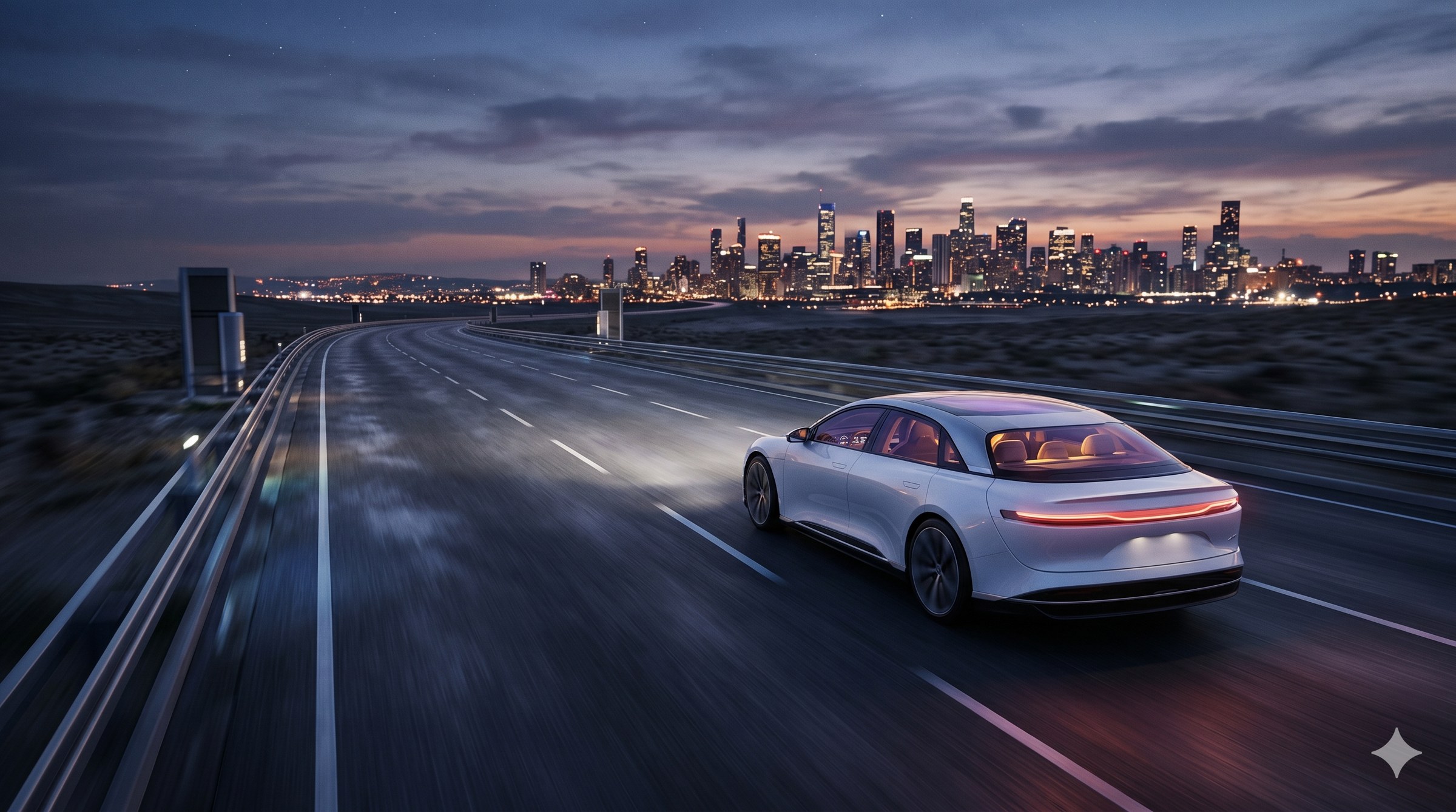
Premium autonomous electric vehicle driving on highway toward city skyline at dusk

"The vehicle is ready before the aircraft door opens. The journey continues without interruption. This is what premium autonomous mobility looks like."

01
Market Reality — 2026

What is actually
happening right now.

The AV revolution is real but uneven — geographically concentrated, moving more slowly than forecast, and divided between two fundamentally different markets: mass-market robotaxi services and premium customised mobility. These are not the same industry.

$364B
Global AV market 2026 — growing to $5.4 trillion by 2035CAGR 34.84%. Battery EV architectures growing fastest at 25.01% CAGR as they match autonomous system requirements. Transportation commands 93% of market value.
Precedence Research · January 2026
250K
Waymo weekly paid rides by mid-2025 — 2,500 vehicles, 5 US citiesPhoenix, San Francisco, Los Angeles, Austin, Atlanta. Level 4 full autonomy — zero safety driver. This is operational, not a pilot. Fleet expected to reach 3,500 by 2026.
Waymo · Carbon Credits · November 2025
11M+
Baidu Apollo Go cumulative orders as of May 2025 — surpassing Waymo15 cities globally. January 2026: fully driverless robotaxi service launched in Abu Dhabi, Level 4, no safety driver, commercially approved. China is the fastest-moving market.
36Kr · Fortune Business Insights · 2025–2026
86%
Robotaxi market CAGR 2025–2033 — from $4.84B to $693.84BThe most explosive segment in the entire AV ecosystem. However: Waymo, the most advanced operator, has not yet achieved profitability despite years of commercial operation.
Grand View Research · Fortune Business Insights · 2026
2–3yr
AV adoption timeline slippage vs. 2021 forecasts — McKinseyIndustry decision-makers pushed back expected timelines by 2–3 years on average. Required investment to reach Level 4 increased 30–100% vs. 2021 estimates. The direction is clear; the pace is not.
McKinsey & Company · Nature npj · April 2026
2027+
UK approvals for fully self-driving cars pushed from 2026 to H2 2027S&P Global: "The ability for a consumer to buy a car that will drive itself everywhere without a driver ready is unlikely by 2035." Consumer-owned full autonomy is a future aspiration; commercial fleet deployment is the near-term reality.
WEF · S&P Global · 2025–2026
CES 2025
Industry shift from "fully autonomous everywhere" to incremental, market-ready solutionsS&P Global: "The hype about fully autonomous cars dominating our streets has faded." At CES 2025, the industry converged on practical, collaborative approaches — not the lofty goals of prior years.
S&P Global Automotive · January 2026
$1.7B
NVIDIA automotive revenue 2025 — targeting $5B in 2026The AI chip infrastructure for autonomous vehicles is production-ready. The hardware is not the bottleneck. Regulation, liability, consumer trust, and operational economics are.
StartUs Insights · November 2025
02
The Negative Case — Evidence-Based

Why the mass-market
robotaxi thesis may be wrong.

$160 billion invested. Decades of promises. And the largest operators still cannot demonstrate a clear path to profitability. The negative case for mass-market AV is not speculation — it is documented, actively playing out, and directly relevant to how the industry should be assessed.

01
Technology — The Edge Case Problem
Computers make mistakes humans would not.
Carnegie Mellon professor Philip Koopman: "Computers make mistakes too." Self-driving cars face billions of unexpected incidents — "edge cases" — that human drivers navigate instinctively but autonomous systems cannot reliably resolve. A human sees a ball rolling into the street and anticipates a child. An AV reacts only when it detects the child.
2018 Uber fatality · 2023 Cruise shutdown (pedestrian dragged 20ft) · 2025 Tesla Robotaxi crashes · Waymo 2025: 19 school bus violations in Texas
02
Economics — Profitability Unproven
The largest operators have not achieved profitability.
Waymo — technically the most advanced operator in the world — has not yet turned a profit despite years of commercial operation. Per-vehicle costs run into the hundreds of thousands of dollars. Investment requirements to reach Level 4 have risen 30–100% above 2021 estimates. Ford, GM, and Apple have all abandoned their most ambitious programmes.
Ford abandoned AV unit · GM shut Cruise ($10B+) · Apple Project Titan cancelled · Argo AI shut down · $160B invested, limited commercial return
03
Regulation — Fragmented Globally
No unified international framework exists.
No unified international regulatory framework for Level 4+ autonomous vehicles. US rules are inconsistent across states. The EU is still developing standards. Asia has fragmented national approaches. A vehicle legal in Phoenix may be illegal in Seoul. Liability, insurance, and accountability frameworks remain unresolved in most jurisdictions.
UK approvals delayed to H2 2027 · NHTSA AV STEP still developing · No OECD-wide Level 4 framework as of 2026
04
Consumer Trust — The Confidence Gap
Most people still do not trust autonomous vehicles.
Consumer trust in autonomous vehicles remains below 30% for full autonomy outside early adopter communities. AV systems are designed to be "more conservative" due to legal and public acceptance pressures — creating the impression of incompetence. S&P Global 2023: consumer-owned full self-driving "unlikely by 2035."
S&P Global Mobility 2023 · Consumer trust surveys below 30% · CES 2025 industry shift from ambition to incrementalism
05
Infrastructure — Geographic Constraints
Most cities in the world are not AV-ready.
Systems optimised for Phoenix or San Francisco degrade rapidly in Seoul's alleys, Mumbai's traffic, Bangkok's motorbikes, or Cartagena's historic streets. HD mapping, V2X infrastructure, 5G connectivity, and road quality differ dramatically across global markets. AV deployment will remain geographically constrained to prepared corridors for the foreseeable future.
Strong in Phoenix · Challenging in most Asian cities · Bengaluru's zPod (2023) — India's first, but limited · Kazakhstan AV freight: highways only
06
Liability — Unresolved Legal Questions
Who is responsible when an AV causes harm?
The legal and insurance frameworks for AV liability remain unresolved in most markets. When an autonomous vehicle causes injury or death, the question of manufacturer vs. operator vs. software provider responsibility has no established answer in most jurisdictions. This uncertainty creates systemic risk for operators and investors alike.
Brookings Institution 2024 policy analysis · NHTSA investigations ongoing · California AV insurance regulations still evolving

"The short history of the self-driving car industry has been littered with expensive failures and endless delays. The hype about fully autonomous cars dominating our streets has faded — replaced by a more practical, incremental approach whose commercial success remains unproven at scale."

Reuters · CES 2025 · S&P Global Automotive · January 2026
03
The Critical Distinction

Mass-market robotaxi
and premium customised mobility
are not the same industry.

The Global Lifestyle OS Position

Waymo is technically the most advanced AV operator in the world.
It is also a mass-market service — and that is not our market.

Waymo serves the general public in Phoenix and San Francisco. By the standards of a Global Lifestyle OS member, it is not a viable option — not because of its technology, but because of its fundamental service model. No vehicle choice. No privacy guarantee. No customisation. No accommodation for companion animals, high-value cargo, or specific security requirements. This is not a criticism of Waymo. It is an observation that they serve a different market entirely.

The Global Lifestyle OS does not partner with mass-market robotaxi services. What we provide is categorically different: the right vehicle, configured to the client's standards, at the precise time and location required — every time.

Mass-Market Robotaxi — What it provides
Assigned vehicle — no choice of make, model, or specification
Shared fleet — used by any member of the public
Standardised A→B transport only — no customisation
Cannot accommodate companion animals, high-value items, or special requirements
No security screening, identity verification, or privacy protocol
Geographic availability limited to AV-ready cities only
Commercial success at scale remains unproven
Global Lifestyle OS — What we provide
Client's own AV — dispatched or positioned at the precise time and location
Curated premium AV partners — vehicles meeting Global Lifestyle OS standards only
Global Lifestyle OS directly owned premium AV fleet — member-exclusive, hub-based
Chauffeur-driven vehicle — available alongside AV, always at the member's choice
Member-driven vehicle pre-positioned — for members who prefer direct control
Available globally — AV where operational, premium alternatives everywhere else
Service value independent of mass-market AV taxi success or failure

"Whether mass-market robotaxi services ultimately succeed or not is a genuinely open question. What is not in question is this: the answer has no bearing on the value we provide. Our clients do not use robotaxis — and they never will."

Global Lifestyle OS · Mobility Framework · 2026
04
Where Autonomous Mobility Delivers Value

Six situations where
autonomous mobility is irreplaceable.

The Global Lifestyle OS deploys autonomous mobility precisely where it delivers maximum value — in the specific situations no other solution serves the premium client as well. These are not hypothetical use cases. They are the core scenarios of daily life for a globally mobile member.

✈️
FBO Last-Mile · Core Case
The Seamless Arrival
At aircraft landing confirmation, the FBO Hub dispatches the client's vehicle — their own AV, a curated partner vehicle, or a Global Lifestyle OS fleet vehicle. The client steps off the aircraft directly into it. No waiting, no navigation, no interaction required after a long flight. This is the most critical single moment in any journey — and the one that defines the platform's promise.
→ Dispatched automatically at landing confirmation · Client's preferred vehicle · Ready before the door opens
🏙️
Unfamiliar City · Zero Friction
Arriving Without Knowing the City
Landing in a city the client does not know. No navigation stress. No language barrier. No negotiation with a driver. The vehicle is pre-positioned, pre-routed, and waiting. Whether it is an autonomous vehicle, a chauffeur-driven car, or the client's own vehicle pre-delivered — the platform ensures the arrival experience is identical to any other city in the world.
→ Pre-positioned before landing · Same experience in every city · No local knowledge required
😴
Fatigue · Recovery
When the Client Cannot Drive
Post-flight fatigue. Post-medical procedure. A day that has demanded too much. The autonomous vehicle does not require the client to manage the journey — they can rest, sleep, work, or simply close their eyes. For a client who regularly crosses multiple time zones and maintains an active professional schedule, this is not a luxury. It is a physical necessity.
→ Complete cognitive rest during transit · No driver interaction required · Autonomous or chauffeur — client chooses
👨‍👩‍👧
Family · Education Integration
The Mobile Classroom
When travelling with children, the autonomous vehicle transforms transit time into learning time. The Finest School's AI platform continues in-vehicle. The parent can engage fully with the child rather than driving. The car becomes an extension of the home and the school simultaneously — a uniquely Global Lifestyle OS integration point.
→ The Finest School platform continues in-vehicle · Full parental presence · Transit = learning time
🏥
Medical · Emergency Dispatch
The Medical Transport Layer
When the FBO Hub physician determines that a member needs to be transferred — from residence to hub for examination, or from hub to partner hospital — an autonomous vehicle provides the most reliable, stress-free transport. Medical personnel can attend to the patient in transit. Pre-programmed routing. No driver briefing. The three nodes of the FBO medical layer — residence, hub, hospital — connected seamlessly.
→ Pre-authorised hospital routes · Medical personnel focus on patient · Automatic dispatch on physician instruction
🔄
Routine Routes · Scheduled Mobility
The Automated Daily Journey
For the globally mobile professional with recurring routes — residence to FBO, FBO to office, school run, hotel to meeting — the Global Lifestyle OS pre-schedules autonomous vehicle deployment so that the vehicle is always there, always on time, without the client thinking about it. Cognitive bandwidth recaptured. Time returned. The routine becomes invisible.
→ AI-scheduled, pre-deployed · Zero booking friction · Client's preferred vehicle, every time
05
The Global Lifestyle OS Mobility Model

Not a taxi company.
An integrated mobility coordinator.

The Global Lifestyle OS provides the right vehicle, in the right form, at the right time and place. The client does not choose from a platform's inventory. The platform adapts to the client's standards — which remain constant, regardless of city, country, or the state of the mass-market AV industry.

Five Forms of Vehicle Provision
01
Client's own AV — dispatched to the precise location at the precise timeThe client's autonomous electric vehicle is positioned, retrieved, and managed by the platform as part of every journey. When the client is in the air, their AV is already on its way to the arrival point.
Manages the client's asset · No new vehicle required
02
Curated premium AV partner — meeting Global Lifestyle OS standardsWhere a client's own AV is unavailable, the platform deploys from a carefully selected set of premium AV partners — not mass-market robotaxi services, but operators whose vehicle quality, privacy standards, and service protocols meet our members' requirements.
Curated, not aggregated · Standards-based, not platform-based
03
Global Lifestyle OS directly owned premium AV — hub-based, member-exclusiveAt key hub locations, the platform maintains its own fleet of premium autonomous vehicles available exclusively to members. No shared pool. Known specification. Prepared to the member's preferences before arrival.
Platform-owned · Member-exclusive · Hub-based operations
04
Chauffeur-driven vehicle — always available alongside AVFor members who prefer human service, or in locations where AV is not yet operationally mature, a professional chauffeur and premium vehicle are always available. The choice is always the member's — the platform never imposes a technology preference.
Always parallel · Never forced · Member's preference respected
05
Member's own vehicle pre-positioned — for members who prefer direct controlFor members who wish to drive themselves, their vehicle is pre-delivered to the arrival point, fuelled, prepared, and waiting. The platform manages the logistics; the member retains control.
Client drives · Platform manages · Vehicle is always ready
The Complete Mobility Stack
Ultra Long Range
Private Jet (G700, Global 7500, BBJ) — Intercontinental and inter-regional. 7,750nm non-stop. Cabin as office, residence, family space. Companion Logistics integrated. FBO arrival guaranteed.
Operational
Regional
Light & Midsize Jets (Phenom 300E, Citation Latitude) — City-to-city within region. 2,000–3,500nm. Korea domestic, Asia regional, European short hops.
Operational
Last Mile — Air
eVTOL (Joby S4, Archer Midnight) — FBO to urban destination in minutes. FAA Stage 4 cleared March 2026. The bridge between aircraft and final destination.
2026–2027
Last Mile — Ground
Autonomous Electric Vehicle — Client's own AV, curated partner AV, or platform-owned AV. Dispatched at landing confirmation. No interaction required. Completes the seamless journey.
Now · Expanding
Premium Ground
Chauffeur-Driven — Where AV is not available or where the member prefers human service. Always parallel to the autonomous layer. Member chooses.
Always Available
Maritime
Yacht / Private Boat — Island and coastal destinations. Maldives, Mediterranean, Hawaiian islands. Coordinated from the FBO Hub as part of the complete mobility stack.
Operational
Questions & Evidence
Will mass-market robotaxi services revolutionise transportation?

The direction is clear; the success at scale is not. Waymo — technically the most advanced operator in the world — has not yet achieved profitability. Regulatory frameworks are fragmented across jurisdictions. Consumer trust outside early adopter communities remains below 30%. Liability and insurance questions are unresolved in most markets. The investment required has exceeded all initial projections. Whether mass-market robotaxi services ultimately succeed, and when, remains a genuinely open question. The optimistic projections are real. So are the obstacles.

Does mass-market robotaxi success or failure affect the Global Lifestyle OS?

No — because they are different industries. Mass-market robotaxi services and premium customised mobility do not serve the same client, at the same standard, in the same way. Our clients do not use robotaxis — not because of technology, but because no robotaxi service can provide: their own vehicle, their privacy standard, their security requirement, their specific configuration for children, companion animals, or sensitive cargo. Whether Waymo scales to 100,000 vehicles or faces further setbacks has no bearing on the value we provide. Our service value is structurally independent of that market's outcome.

If a client owns an autonomous EV, does that reduce demand for the platform's mobility services?

The opposite. When a client owns an AV, the platform's value in managing that asset increases. Positioning the client's AV at the right time and location, managing it during travel, ensuring it is prepared to the client's specifications on return — this is a service the client cannot efficiently provide themselves across multiple cities and time zones. The platform coordinates the client's own asset. AV ownership expands what we can do for the client; it does not reduce it.

Why do major automakers abandon their autonomous vehicle programmes?

Three reasons, all documented: cost exceeded projections by 30–100%; timelines slipped by 2–3 years on average; and the path to profitability remained unclear for mass-market consumer applications. Ford, GM, and Apple each concluded that the return on investment for mass-market full autonomy was insufficient relative to the capital required. This is not evidence that autonomous vehicles will fail — it is evidence that mass-market full autonomy is harder and more expensive than the optimistic projections of 2019–2021 suggested.

Is AV a Physical AI application that will create a transformative new market?

Yes — but the transformation is already clearly stratified. The $364B → $5.4 trillion growth trajectory is real and supported by multiple independent market analyses. However, the winners will be concentrated: a small number of operators (Waymo, Tesla, Apollo Go) serving mass markets in AV-prepared cities, and premium integrated platforms serving the globally mobile, high-net-worth segment with customised, standards-based service. These are not the same business. The Global Lifestyle OS is the latter — and the latter does not depend on the former's success.

"Physical AI — autonomous vehicles, humanoids, robotics — is not a separate industry. It is the infrastructure layer that makes the Global Lifestyle OS physically real in every location it operates. The AV is not the product. It is the connective tissue between every other service the platform provides."

Global Lifestyle OS · Mobility Layer Framework · 2026
The Platform Stack

Three platforms. One seamless journey.

✈️
Aviation · eVTOL · AV
PrivateJets.kr — The Mobility Platform
Private jet + eVTOL + autonomous vehicle — sequenced as one continuous movement. The AV dispatched automatically at landing confirmation. No separate booking, no coordination required by the member.
privatejets.kr →
🌐
Global Lifestyle OS
ZZOAH — The Coordinating Intelligence
ZZOAH coordinates every mobility touchpoint — from aircraft departure to vehicle arrival at residence — as a single managed journey. The member experiences one seamless movement. The platform manages every transition invisibly.
zzoah.com →
📚
Education · Mobile Learning
The Finest School — Learning in Transit
The autonomous vehicle transforms transit time into learning time. The Finest School's AI platform continues in-vehicle — so that mobility and education are no longer separate experiences for the globally mobile family.
thefinestschool.com →
The Mobility Layer Is Ready

Not waiting for the future.
Operating in it.

The Global Lifestyle OS mobility stack is anchored by private jet operations that are live today, with eVTOL, autonomous electric vehicle, and yacht coordination each advancing toward the same standard that matters to the clients who matter.